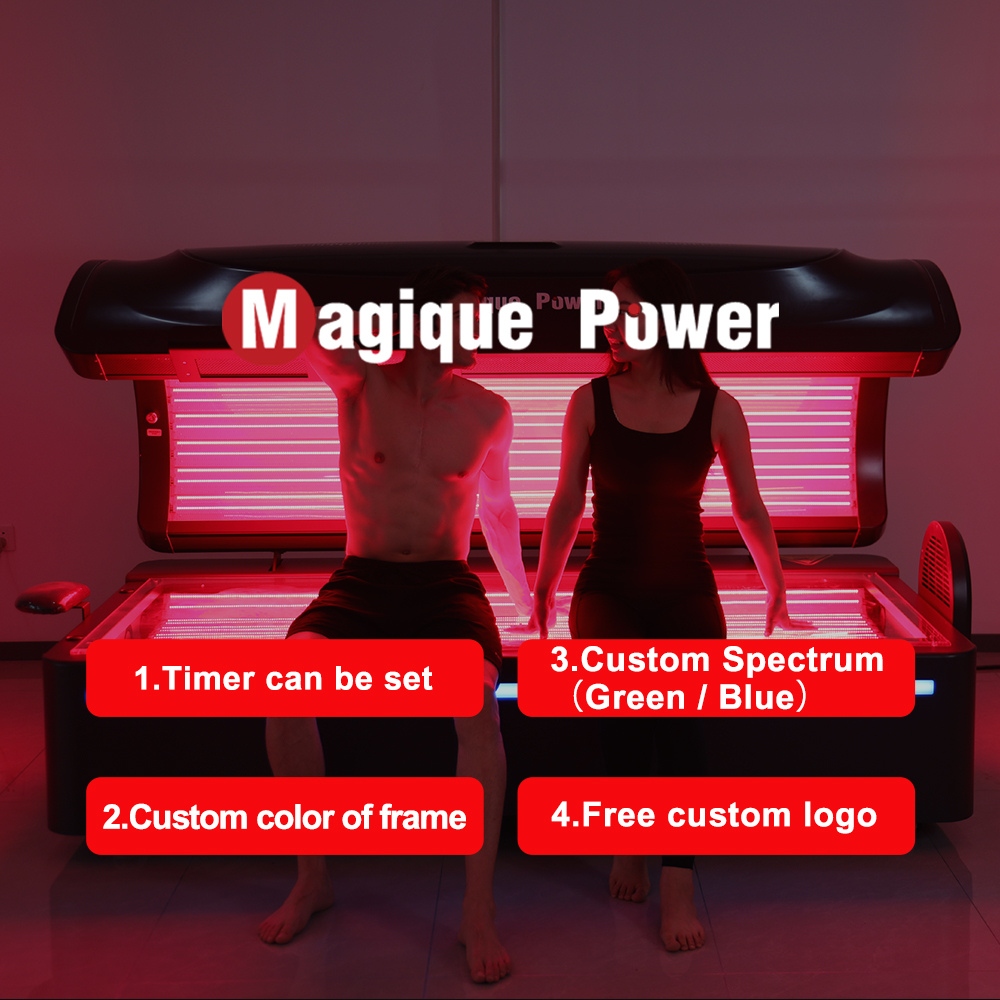
Discover the care solution with the Red Light Therapy Bed. This advanced red light therapy device effectively treats acne, accelerates wound healing, enhances skin elasticity, and supports overall skin health.
Can you use red and blue light therapy together?
Generally speaking, red light and blue light can be used in combination, especially in the treatment of mild to moderate acne vulgaris. Red and blue light combined therapy can not only effectively reduce skin lesions and inflammation, but also reduce scar formation, and is relatively safe. For example, red light can help repair minor skin irritation or inflammation caused by blue light therapy, while blue light can enhance the repair effect of red light by removing bacteria or regulating sebum secretion. The combined use of red and blue light therapy needs to be adjusted according to the skin type, condition, and treatment goals.
Difference between red light therapy and blue light therapy
There are significant differences between red light therapy and blue light therapy in terms of wavelength, mechanism of action, scope of application, and therapeutic effect:
Wavelength:
- Red light therapy usually uses a wavelength of 625±10nm, which belongs to the red part of visible light.
- Blue light therapy uses a wavelength of 407~420nm, which belongs to the blue part of visible light.
Mechanism of action:
Red light therapy:
- It promotes the synthesis of adenosine triphosphate (ATP) through photochemical action, increases cell metabolism, promotes cell proliferation, accelerates the release of growth factors, improves local blood circulation, and promotes local repair of fibroblasts.
- Red light has a lower frequency and a longer wavelength and can penetrate the surface of the skin to reach the submucosal layer. It is absorbed by the tissue cells in the submucosal layer of the skin, enhances cell activity, accelerates protein synthesis, promotes energy metabolism, and further enhances the phagocytosis of white blood cells. It inhibits wound inflammatory response, promotes blood circulation, promotes muscle relaxation, and relieves patient pain.
Blue light therapy:
- It promotes the transformation of intracellular energy through light energy and accelerates cell growth and circulation. It also has antibacterial effects and inhibits the occurrence of inflammation.
- Blue light can efficiently destroy Propionibacterium and Malassezia without damaging skin tissue. Minimize the formation of acne, and significantly reduce the acne in the inflammatory phase to heal in a short period of time.
- Blue light irradiation can convert unconjugated bilirubin in the newborn's body into water-soluble isomers, which are excreted from the body through urine, thereby reducing the concentration of serum bilirubin and improving jaundice symptoms.
Scope of application:
Red light therapy:
- Mainly used to promote the healing of chronic wounds, especially chronic wounds with larger wound surfaces such as lower limb ulcers.
- Suitable for skin care and health care treatment, such as improving the condition of sallow and dull skin. Promote blood circulation, increase skin elasticity, anti-aging, anti-oxidation, and repair, etc.
Blue light therapy:
- Mainly used to treat acne, especially acne in the inflammatory stage. The therapeutic effect is achieved by inhibiting excessive secretion of sebaceous glands and destroying Propionibacterium acnes.
- Used to treat neonatal hyperbilirubinemia, decompose unconjugated bilirubin in the body through photooxidation, reduce serum bilirubin concentration, and improve jaundice symptoms.
Treatment effect:
Red light therapy:
- It can accelerate the healing speed of chronic wounds, reduce the wound area, and increase the relative healing rate.
- By enhancing cell activity and promoting blood circulation, it can reduce the pain of patients' wounds and improve the quality of life of patients.
Blue light therapy:
- It has a significant therapeutic effect on patients with acne, can quickly inhibit inflammation, reduce the number of acne, and improve skin conditions.
- It has a significant therapeutic effect on neonatal hyperbilirubinemia, can effectively reduce serum bilirubin concentration, reduce the incidence of adverse reactions, and improve the safety and comfort of treatment.
Safety:
Red light therapy:
- It is relatively mild and will not cause excessive wound temperature, preventing secondary damage caused by increased temperature.
- It does not contact the skin, will not cause physical damage to the wound, and has a high degree of safety.
Blue light therapy:
- Intermittent blue light irradiation has a lower incidence of adverse reactions than continuous irradiation, improving treatment's comfort and safety.
- It is necessary to protect newborns' eyes and private parts to avoid burns.
In summary, red light therapy and blue light therapy each have unique wavelengths and mechanisms of action. They are suitable for different clinical scenarios, and have their advantages in terms of therapeutic effect and safety. The choice to use light therapy should be based on the specific condition and the doctor's advice.


